How to Write a Wedding Planner Proposal That Gets Booked
Published 25 October 2026 · 8 min read
A couple who asks for your proposal is already interested. Most of them are also talking to two or three other planners. The proposal is where they decide, often late at night, side by side on a sofa, without you in the room to answer questions.
So a good wedding planner proposal has one job: answer every question the couple has before they need to ask it, and make saying yes feel easy. This guide walks through exactly what to include, in the order that works.
1. Send it fast
Speed is the easiest advantage to win. The couple is most excited right after your call. Aim to send your proposal within 24 hours, while they still remember how the conversation felt. A ready-made template is what makes this realistic, because you are filling in details, not designing from scratch.
2. Open with their wedding, not your business
The first page should show you listened. Use their names, their date, their venue (or the venues they are considering), guest count and the feeling they described. One or two sentences in their own words beat a paragraph about how many years you have been planning.
For example: “Priya and Sam, you want a relaxed garden ceremony for 120 guests where nobody feels rushed, and you want to actually enjoy the day instead of managing it.” That sentence tells them you understood, and that you are the person who will make it happen.
3. Include these sections
A wedding planning proposal that books clients usually has these parts:
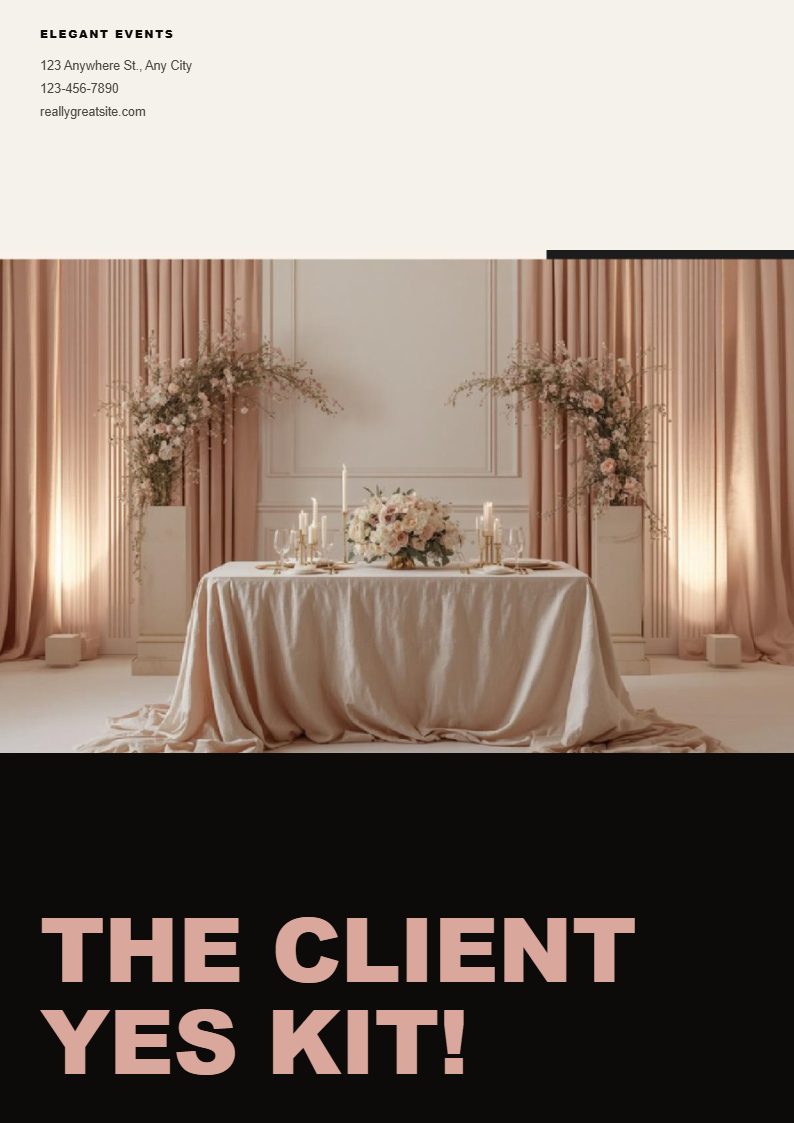
- Cover: the couple's names, date and a photo that matches their style.
- Their vision: a short recap of what they told you.
- Your approach: how you will plan their wedding, step by step, so they can picture working with you.
- Packages and pricing: clear options with what is included in each.
- Planning timeline: the key milestones from booking to the day itself.
- Proof: two or three short testimonials and a few photos of real weddings.
- FAQs: answers to the questions that hold couples back.
- Next step: exactly how to book, and by when.
Keep it to around four to six pages. Long enough to feel complete, short enough to read in one sitting.
4. Price it with two or three packages
A single price invites a yes-or-no decision. Two or three packages change the question to “which one?”, which is a much easier decision to make.
- Make the middle package the one you want them to choose. Most couples pick the middle option.
- List what is included, not just the price. Number of meetings, vendor management, day-of coordination hours, rehearsal attendance, and so on.
- Show the payment schedule. A deposit to secure the date and the balance in stages feels far lighter than one large number.
5. Answer the worries before they become objections
The questions couples ask most before booking a planner are about money and control. Answer them in a short FAQ section:
- Is the deposit refundable? What happens if we change the date?
- Do you work with our chosen venue and vendors, or only your own?
- How often will we hear from you, and how?
- Who is actually there on the day?
- What happens if something goes wrong?
Every question you answer in the document is one less reason to “think about it” and go quiet.
6. Show proof that feels real
Couples trust other couples. Use short testimonials with first names and the wedding location or season, and pair them with real photos where you can. One specific quote such as “she handled the rain plan so calmly we didn't even notice” is worth more than five generic five-star reviews.
7. End with one clear next step
Do not end on your contact details and hope. Tell them exactly what to do: sign the contract, pay the deposit, and their date is secured. Give a gentle reason to act now, such as holding the date for 7 days, because popular dates do go to other couples.
Many planners combine the proposal and contract into one document so the couple can say yes and sign in the same moment. That removes a whole step where interest can cool.
8. Send it with a short, warm email
The email that carries your proposal matters too. Keep it short: thank them for the call, mention one detail from the conversation, attach the proposal as a PDF, and say when you will check in. Avoid long explanations in the email itself; let the proposal do the work.
9. Follow up (most bookings happen here)
Silence rarely means no. Couples get busy, wait for a parent's opinion, or compare quotes. A polite follow-up three or four days later, then once more about a week after that, recovers a surprising number of bookings. Offer to answer questions on a short call rather than asking “did you decide?”.
Common mistakes to avoid
- Opening with a long “about me” page.
- Hiding the price or making them email to ask for it.
- Sending a plain text document that does not match the style you are selling.
- Ending without a deadline or next step.
- Not following up at all.
Skip the blank page
The Client Yes Kit gives you 16 wedding planner templates — proposals, proposal-and-contract combos, planning timelines, and the exact emails to send and follow up — all editable in your browser and downloadable as PDF.